One studio doubled its wishlists before launch and still sold 35% fewer copies in the first week. Another collected 98% positive reviews while almost a quarter of its buyers asked for their money back. A third released a game that is still on sale, and closed anyway, because nobody would fund the next one. None of this looks like a disaster from the outside, which is exactly why such risks are so easy to miss when a game is picked for funding or its launch is being planned.
The stories come from 38 public documents published between January and October 2026, from studio statements and postmortems to industry surveys, Steam documentation and academic papers. Fourteen of them are developers’ own posts on public forums. Most concern small and mid-size independent teams making games for PC.
In each of them, money went in on the strength of an assumption that nobody had checked. Sometimes it was the belief that people wanted this particular game, sometimes that the team could finish it within the budget, that buyers would get the experience they had been promised, or that the studio would still have money once the game was out.
Chapter 1
More wishlists, fewer sales
Studio Ortica released two games in 2026. Birds Watching came out on 6 March with 5,014 wishlists and sold 2,539 copies in its first week. The Old Flesh of Nuraga followed on 27 August with 10,107 wishlists, twice as many, and sold 1,639. The studio published both sets of figures in its own postmortem.1
The second game therefore arrived with double the audience on paper and sold about 35% fewer copies over the same window. A forecast built on one familiar ratio, sales per wishlist, would have got it badly wrong, even though the ratio came from the same team’s previous release.
The studio credits most of Nuraga’s wishlists to the summer Next Fest and to Steam’s personal calendar. A month after launch, with 2,600 copies sold, the author offered two possible explanations for the gap, momentum carried over from earlier work fading away or plain random variation, and admitted that the answer would only become clear next year.1
Studio Ortica · two launches in 2026
The second game had twice the wishlists and sold fewer copies
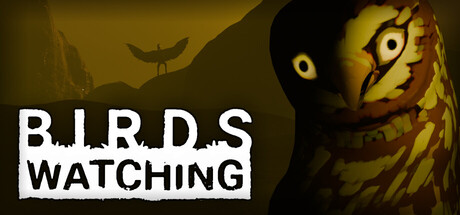
Birds Watchingreleased 6 Mar 2026 · 0.51 copies per wishlist

The Old Flesh of Nuragareleased 27 Aug 2026 · 0.16 copies per wishlist
Wishlists on launch dayNet copies sold in the first week
A wishlist records interest at one particular moment. The player may have watched a trailer, tried a free demo, been waiting for a discount or simply put the decision off. Two games also differ in genre, price and audience, so Ortica’s numbers show the size of the gap without pointing to a single cause.
The wider market has been moving the same way. How To Market A Game compared 160 launches and found that, for every wishlist on launch day, a game released in 2023–2025 sold about half as many copies in its first month as one released in 2020–2022. Within each period the wishlist count still remained the best single predictor of sales.2 Wishlists have not stopped mattering, but each one is now worth less than it used to be, and a ratio borrowed from an older launch comes with an older price.
There is also a quieter problem with the ratio itself. Dividing all first-week sales by the wishlist count does not tell you what share of the list actually bought the game, because some buyers never wishlisted it at all. A true conversion rate needs data on one and the same group of people, and Valve’s own documentation warns against any universal formula that turns wishlists into sales.3
Chapter 2
Good reviews, a quarter refunded

In August the developer of Dino Party wrote about a launch with 21,000 wishlists and about 2,800 copies sold in the first week. At the time of the post the game had 56 reviews, 98% of them positive, while refunds had reached 24.8% of purchases. All of these figures come from the developer.
The developer’s explanation centred on buyers who had expected to find partners through matchmaking. With few people online that did not work well, and the team went on to spell out the requirements for playing together more clearly. The post does not say how many of the refunds were caused by matchmaking in particular.
What makes the case instructive is the situation itself. Someone could buy a game that worked perfectly well and still not get the evening with other players that they had paid for. An organised playtest, where the team gathers the participants in advance, would most likely miss this, since in such a test nobody ever waits alone for a match.
Dino Party · August 2026
Almost every review was positive, and a quarter of buyers asked for their money back
Reviews56 at the time of the post
98% positive
Purchasesabout 2,800 in the first week
24.8% refunded
The rating gave no warning either. A satisfied player tends to leave a review, while a disappointed one can return the game within the refund window without writing a word, so the two numbers describe different actions taken by different groups of buyers.
Chapter 3
Five years and the wrong expectations
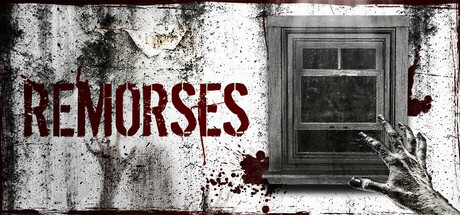
Remorses, a survival horror game from Twistedline Games, came out in June after five years of development. In a July postmortem its author reported about 16,000 wishlists and around 600 copies sold so far, and pointed to two likely culprits, a progression system that players found unclear and the expectations people bring to survival horror, combat included.
The figures describe an early result, and the explanation is the developer’s own. The problem it points to is a familiar one all the same. A buyer recognises a few signs of a genre and fills in the rest from experience, while a studio that has lived inside its project for years may find the differences so obvious that it never thinks to explain them. When the audience expects one game and receives another, it becomes hard to say what a like, a follow or a wishlist ever meant.
Developers themselves rank this among the hardest parts of the job. In Unity’s 2026 report a quarter of the surveyed developers named agreeing on an idea that is interesting and distinctive in the market as a major challenge, ahead of keeping the project in scope and on time, and ahead of marketing.4 The trouble begins long before the ad campaign does.
Unity Gaming Report 2026 · 300 developers
What developers called their biggest development challenges
Chapter 4
Out of money after launch
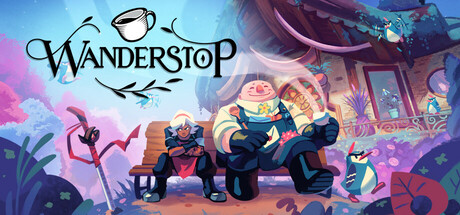
On 27 March Ivy Road announced that it would close four days later. The studio had been unable to fund its next project, Engine Angel, after failing to land a publishing deal. Wanderstop, the game it had released a year earlier, stayed on sale, and player support passed to Annapurna Interactive. The statement did not say whether Wanderstop had made money.5
In September KO_OP, the worker-run studio behind Young Suns, laid off 13 people. According to Game Developer, it could not secure funding for new projects while still working on its current ones, and it kept its live projects and prototypes going.6 These were far from the only such announcements of the year.
2026, January to October
Studios that closed or cut staff this year
Ivy Road announces that it will close on 31 March, after funding for its next game never arrived. Wanderstop stays on sale. 5
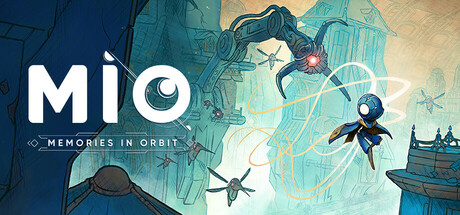
Douze Dixièmes a team of about ten, closes five months after MIO: Memories in Orbit, which was well reviewed but sold below expectations. 7
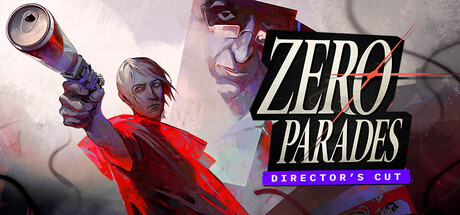
ZA/UM cuts up to 32 jobs two months after Zero Parades, saying the game’s sales could not support a studio of its size. 8
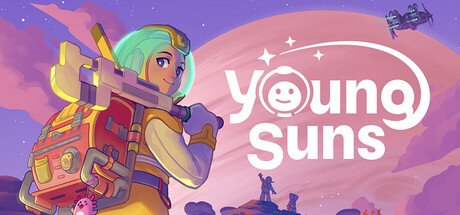
KO_OP lays off 13 people because it cannot fund new projects alongside its current work. 6
- unannounced game
Heart Machine lays off nearly everyone after the publisher of its unannounced game pulls out. 9
After launch a studio still pays for support, fixes and the team itself, while the next project has to be prepared and sold to a partner, and negotiations do not pay salaries until the money actually arrives. A game that keeps selling does not close that gap on its own.
Even a healthy launch can amount to a modest salary. Birds Watching, the better of Studio Ortica’s two results, earned about $48,000 gross, of which roughly €12,000 reached the studio, around €4,000 per developer by the author’s own count.1
For smaller teams the gap opens even earlier. In a June forum post three developers described reaching 9,500 wishlists without any paid marketing while they were still looking for the money to finish their game. They had found an audience, but not yet the means to get the game to it.
Chapter 5
169 demo downloads, 15 answers
In March the developer of Tunnels described a playtest with rewards in a public post. It produced 169 downloads and 15 answers, some of which said very little. The gift cards ended up costing more than planned, and the game itself kept changing while the test was running.
Every producer knows this kind of result. Recruiting went fine, yet the team was hardly more confident about its next decision. A download does not prove that someone played the part of the game that needed testing, and a completed form does not guarantee that the person understood the question or played the same build as everyone else.
Tunnels · a playtest with rewards, March 2026
Where 169 playtest downloads went
15answers came back, some of them saying very little
154downloads that never turned into an answer
Steam Playtest makes it easy to hand out access, but Valve’s documentation is explicit that collecting feedback remains the developer’s job.10 The tool brings people to the door and leaves everything after that to the studio.
Reviews after launch have a similar blind spot. They show what bothers people enough to write about it, whether that is pacing, the tutorial, the controls or the translation, but the players who left in silence barely appear in them. A CHI 2026 study of 152,143 Metacritic user reviews makes the same point about its own method, which measures what people wrote rather than what the whole audience experienced.11
Chapter 6
A good demo and the cost of finishing

In August the developer ByerN wrote about three finished games, two of them already released. Node Farm and Node Math were made one after the other, partly alongside a day job, and together, according to the post, they brought in more than $150,000 in net revenue. That figure is not profit, since the post does not account for every cost or for the author’s own time.
It is a story about a working sequence of small projects, and it also raises a question of scale. A result like this can sustain one person, but a studio that pays several specialists every month lives by different arithmetic.
A convincing demo proves that a team can build a good slice of a game. Whether it can build the whole thing depends on the remaining content, the tools, the testing and the support. A mechanic added late can force changes to the tutorial, the interface, the balance and the translation, so its real cost rarely ends with the first version that works.
Some of that cost hides where nobody budgets for it. A study presented at GAS 2026 observed 20 developers at one studio while they dealt with bugs. Inspecting game artifacts took 36.6% of their time and reproducing the bug another 35.1%.13 One studio sets no industry norm, but the pattern is telling, because most of the effort went into finding and recreating problems before anyone changed a line of code.
GAS 2026 · 20 developers at one studio
How the observed debugging time was spent
Inspecting game artifactsReproducing the bugEverything else, the fix included
The same reasoning applies to AI tools. A saving only exists if it survives the whole task, from preparation and generation to review, fixes and maintenance, and material that is produced quickly but then takes a long time to redo has not saved anything yet.
Chapter 7
One marketer among thousands of games
By the count of How To Market A Game, 7,240 games took part in Steam Next Fest in October 2026. In June there had been 4,382, and in February 3,536.14 For a small studio that means hard choices about where to spend its time, what material to prepare and how to read the result afterwards, and the number of entrants says nothing about how evenly the attention was shared.
Steam Next Fest · three editions of 2026
How crowded the festival became in 2026
7,240 gamesOctober 2026
One of them is yours
February, 3,536added by June, 846added by October, 2,858
In an April forum discussion developers complained about promotion fatigue and contradictory advice. Their frustration is easy to understand. Marketing competes with development for the hours of the same few people, and the advice to be present everywhere does not say which effort will pay for itself.
There are encouraging examples too. A GDC 2026 talk on The Operator, made by the solo studio Bureau 81, describes a year-long campaign with a budget of $50,000 that produced more than 340,000 wishlists and over 120,000 copies sold.15 The game came out in 2024, so this is a look back rather than a 2026 launch, and figures from a talk description cannot be turned into a universal price per buyer.
Part of the confusion comes from myths about Steam itself. Valve sets no universal wishlist threshold for visibility. Its documentation says that page traffic and conversion are not visibility factors in themselves, and that wishlists usually are not a direct factor either, apart from a few cases such as the Popular Upcoming list.163 Outside traffic still helps when it turns into real purchases, though the visit counter alone earns a game no extra promotion. When a launch disappoints, “Steam didn’t show us” explains far less than a careful look at the point, somewhere between the first glimpse of the game and the purchase, where interest was lost.
Chapter 8
Mobile games and the price of keeping players
Mobile publishing runs on a different set of numbers. What matters there is the cost of bringing in a player, how long that player stays, how much they spend and when the money spent on acquiring them comes back, so PC wishlist data is of little use.
In ZBD’s 2026 survey of 195 people from the mobile industry, 51% named balancing monetisation with a fun player experience as their biggest difficulty, and half said they had increased their retention budgets over the previous year. ZBD sells reward systems, so its survey describes a problem rather than proving that the company’s product solves it.1718
ZBD survey · 195 people from the mobile industry
What mobile teams told a rewards vendor
said balancing monetisation with a fun player experience was their biggest difficulty
had increased their retention budgets over the past year
Azur Games, writing in July about what publishers look for, described rising acquisition costs, longer payback periods and the growing weight of retention when projects are chosen. For a hybrid game it gave its own bar of about 40% of players returning the next day and at least 15% on the seventh day.19 That is one publisher’s standard for its own segment rather than a pass mark for every mobile game.
The practical conflict appears when a change in monetisation lifts revenue in the short term but makes players come back less often. An overall average can hide the fact that new users react differently from long-standing ones and that audiences from different channels behave differently. The reverse happens as well, when better retention costs more than it brings in.
Chapter 9
What the stories have in common
The games in this piece differ in genre, size and fortune, yet many of their problems left traces well before they became expensive. Experienced publishers will recognise every one of them. What the stories add is a reminder of how ordinary numbers can mislead, together with a few questions that seem worth asking a little earlier than usual.
| The signal | Where it showed up | What is worth knowing before the next payment |
|---|---|---|
| Wishlists grow faster than sales | Studio Ortica’s second launch | Where the audience came from and what people saw before adding the game, and how the forecast holds up against comparable games over the same sales window in a cautious, a base and a favourable case. |
| A high rating alongside many refunds | Dino Party | Who returns the game and after how long, whether a player who arrives alone can get the promised experience when few people are online, and whether the store page makes the conditions for playing together clear. |
| Interest in the page that does not turn into sales | Remorses | Whether strangers who buy similar games describe this one the way the studio does, both before they play the demo and after. |
| The game is out and the team is shrinking | Ivy Road, KO_OP, ZA/UM, Douze Dixièmes | How much money the studio needs until its next confirmed income rather than only until release, and when the decision on its next project will be made. |
| Plenty of test downloads and few useful answers | Tunnels | Which single question the test is meant to answer, who launched the build and reached the part being tested, and whether the build stayed the same throughout. |
| A loved demo and a release date that keeps slipping | ByerN, Mumpitz Games | What one full cycle of a typical piece of content costs with fixes and testing included, and which system drags the most dependencies behind it. |
| A busy campaign with an unclear effect | Next Fest, The Operator | What job each channel is expected to do, and at which step between seeing the game and buying it interest is being lost. |
| Revenue rises while players leave | ZBD survey, Azur Games | Which metric should improve and which decline is unacceptable, judged on comparable groups of players over a window long enough for payback. |
Where a publisher meets these risks
From the first pitch to the next project


Choosing a game
Much of the risk in these stories sits in the distance between one good test and a whole project. A strong demo or a spike in wishlists answers one question well. The cost of finishing the game and the studio’s own need for cash are separate questions, and they seem to deserve separate numbers.
Setting the release date
The Dino Party and Remorses cases suggest walking the path of a new buyer who arrives alone, knows nothing about the team and has only the store page to go on. Translation, updates and launch support also tend to cost more than their first estimate, which is worth reflecting in the cautious forecast before the date is fixed.
The first weeks after launch
Sales, refunds, reviews, support tickets and playthrough data only tell a coherent story when they are read together. An overall rating, or one loud review, rarely explains on its own why players leave.
The next project
Several of this year’s closures came while a studio was waiting for a decision on its next game. A date for that conversation, agreed in advance, gives a team time to plan its costs or look for alternatives. Shared definitions of the metrics, set before launch, help a difficult conversation after a weak result stay a conversation about facts.
One question for the next meeting
Which unconfirmed assumption weighs most on the budget right now, and what small test could change the decision?
Whatever the answer, the test is most useful when it ends in a choice to keep investing, change the project, cut its scope or stop spending. That is also the kind of outside look a busy team rarely has time for, whether the question is demand, getting the game finished or making sense of how buyers reacted.
CritField runs this kind of check on a single game or on a whole slate. [email protected]
Where the numbers come from
Everything here comes from public sources published between January and October 2026. We gathered and checked the material by 1 November, reworked it for publishers on 2 November and checked every figure against its source once more on 4 November, so nothing from November is included.
The base holds 38 documents, fourteen of them developers’ own posts on public forums, which are linked in the text wherever their figures appear. Studio and forum figures are what the authors themselves reported, with no independent audit, and that is why the caveats stay next to the numbers. Early sales are not final sales, net revenue is not profit, and sales to all buyers are not a conversion rate from a wishlist.
We did not try to measure how often any of these problems occur across the industry. Open English-language discussions reflect independent PC teams better than anyone else, and the mobile chapter rests on a vendor survey and one publisher’s view. The surveys describe the background rather than 2026 alone. Unity’s report is based on 300 interviews conducted in 2025, and GDC’s survey of more than 2,300 professionals asked about layoffs over the two previous years.20 A preprint on 267 postmortems from 1998–2025 was read only as an abstract, so it is not used as evidence of which problem led in 2026.21 Our conclusions are drawn from these stories and promise no commercial result.
Sources 21 documents · developers’ posts are linked in the text
| 1 | One year and a half of Studio Ortica in numbers | Luca Folino, Studio Ortica | Studio postmortem | 30 Sep 2026 |
| 2 | Wishlist inflation is real, but they are still important | How To Market A Game | Practitioner analysis | 13 Oct 2026 |
| 3 | Wishlists | Valve, Steamworks documentation | Platform documentation | accessed Nov 2026 |
| 4 | Unity Gaming Report 2026 | Unity | Industry survey | 2026 |
| 5 | Ivy Road closes its doors | Ivy Road | Studio statement | 27 Mar 2026 |
| 6 | Worker-run studio KO_OP confirms layoffs | Game Developer, Chris Kerr | News report | 14 Sep 2026 |
| 7 | MIO: Memories in Orbit developer Douze Dixièmes shutting down | Insider Gaming | News report | Jun 2026 |
| 8 | ZA/UM Studios to lay off up to 32 workers two months after releasing Zero Parades | Game Developer | News report | 17 Jul 2026 |
| 9 | Hyper Light Drifter maker Heart Machine lays off nearly everyone | Game Informer | News report | 17 Sep 2026 |
| 10 | Steam Playtest | Valve, Steamworks documentation | Platform documentation | accessed Nov 2026 |
| 11 | Mining Player Experience Trends From Game Reviews Using Large Language Models | Supriya Dutta et al., CHI 2026 | Peer-reviewed paper | 13 Apr 2026 |
| 12 | The week of the golden age | How To Market A Game | Practitioner analysis | 18 Aug 2026 |
| 13 | Identifying Video Game Debugging Bottlenecks: An Industry Perspective | Carlos Pinto Gomez and Fabio Petrillo, GAS 2026 | Peer-reviewed paper (abstract) | Apr 2026 |
| 14 | How sloppy is the October 2026 Steam Next Fest | How To Market A Game | Practitioner analysis | 21 Oct 2026 |
| 15 | From Project Operator to The Operator | Lewis Burnell, ICO Partners, GDC Vault | Conference talk description | 2026 |
| 16 | Visibility on Steam | Valve, Steamworks documentation | Platform documentation | accessed Nov 2026 |
| 17 | Retention Challenge Report 2026 | ZBD | Vendor survey | 2026 |
| 18 | Games Industry Fatigue: 80% of mobile developers say engagement strategies are repetitive | ZBD via GamesPress | Vendor press release | 15 Jun 2026 |
| 19 | What publishers look for in 2026 | Eugene Tatonkin, Azur Games | Publisher's position | 17 Jul 2026 |
| 20 | 2026 State of the Game Industry | GDC | Industry survey | Jan 2026 |
| 21 | Evolution of Software Engineering Problems in Game Development: A Longitudinal Empirical Study | Claude Cardinal and Bruno Bouchard, SSRN | Preprint (abstract) | 16 Jul 2026 |