 01 · Headline charts
Twelve charts, free to use
Headline, numbers and source are on every image. Click one to open it full size.
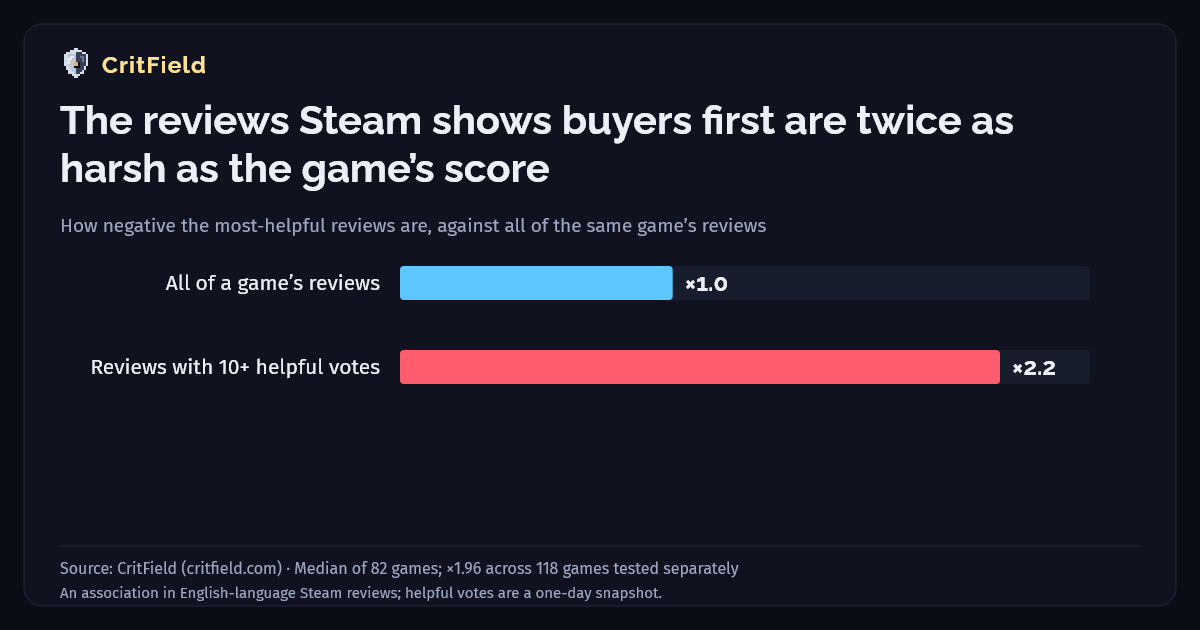
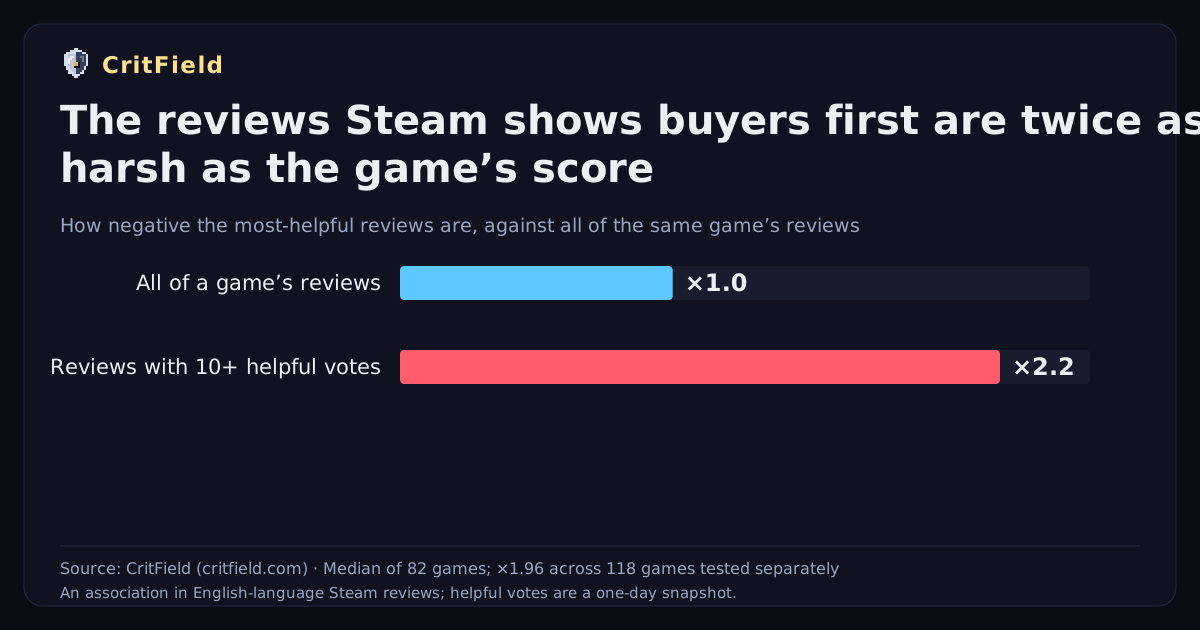
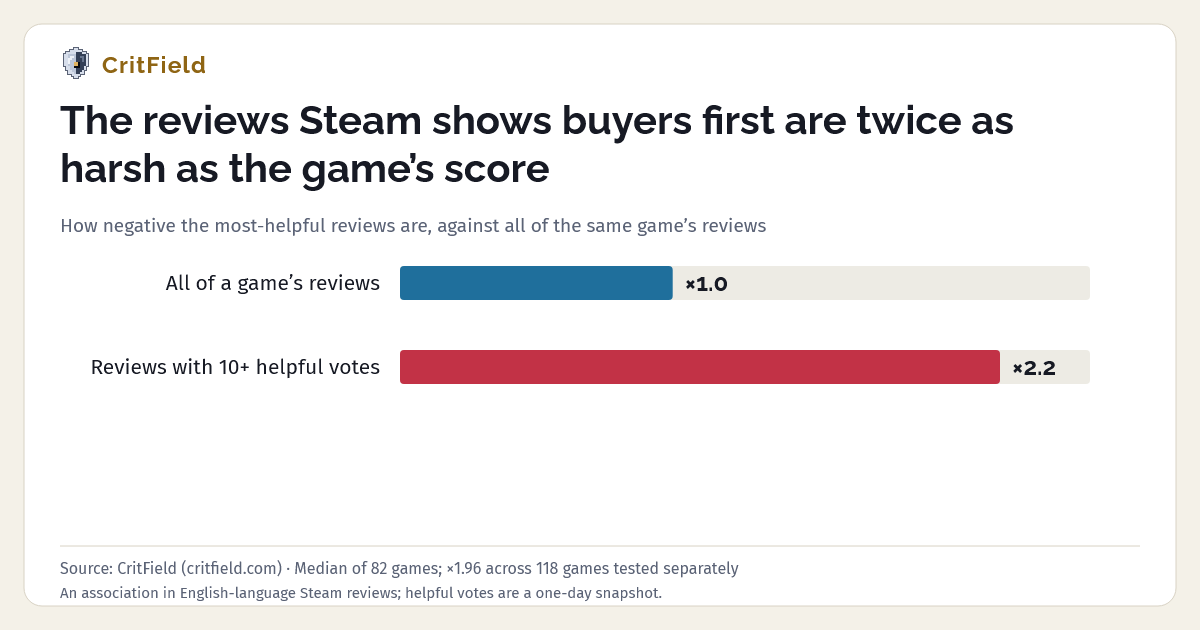
The reviews Steam shows buyers first are twice as harsh as the game’s score
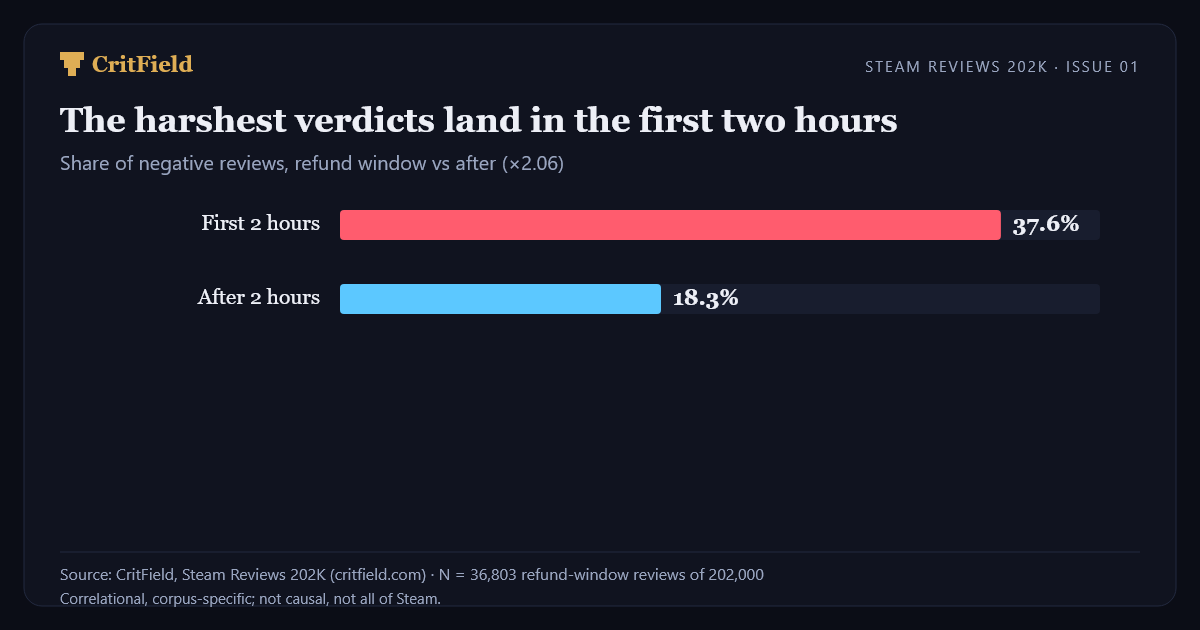
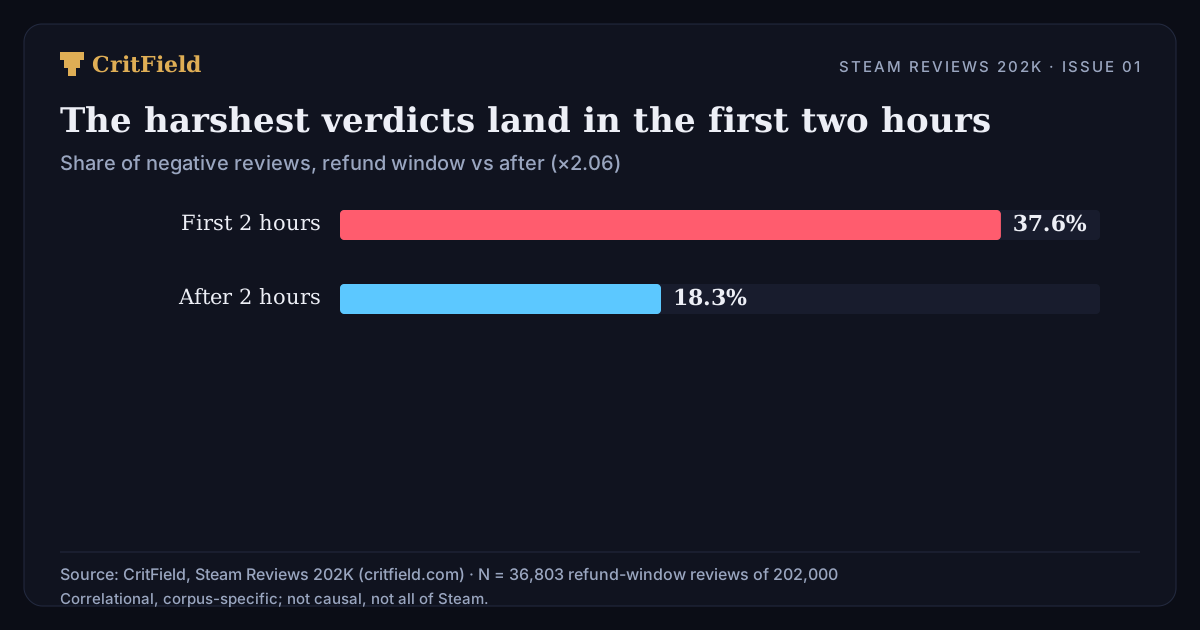
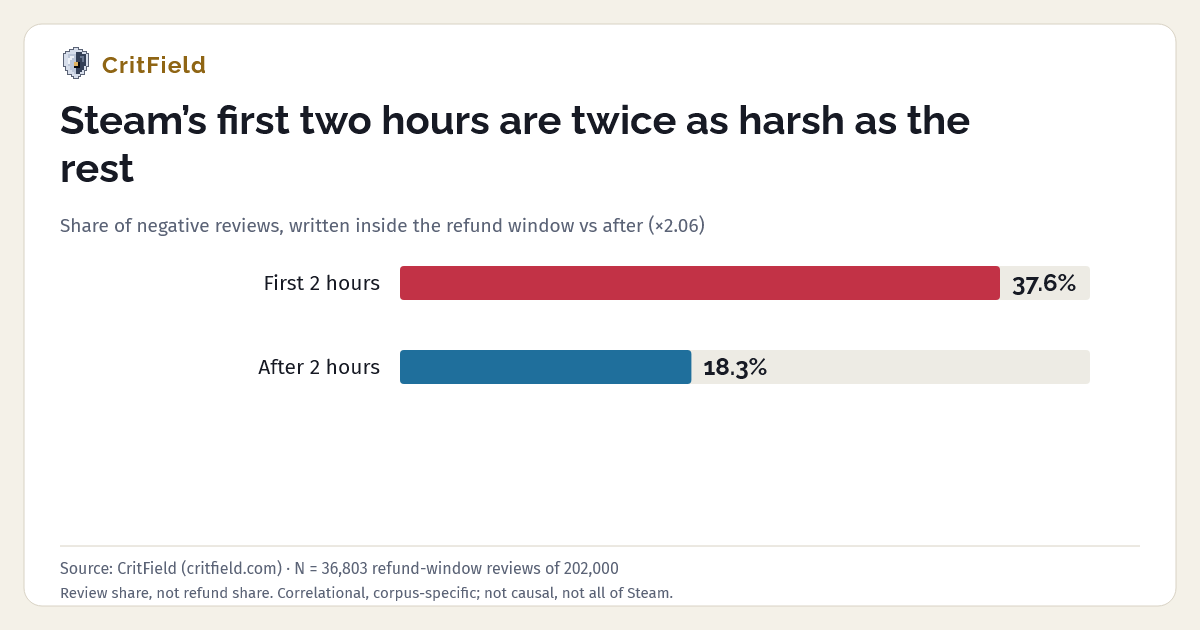
Steam’s first two hours are twice as harsh as the rest
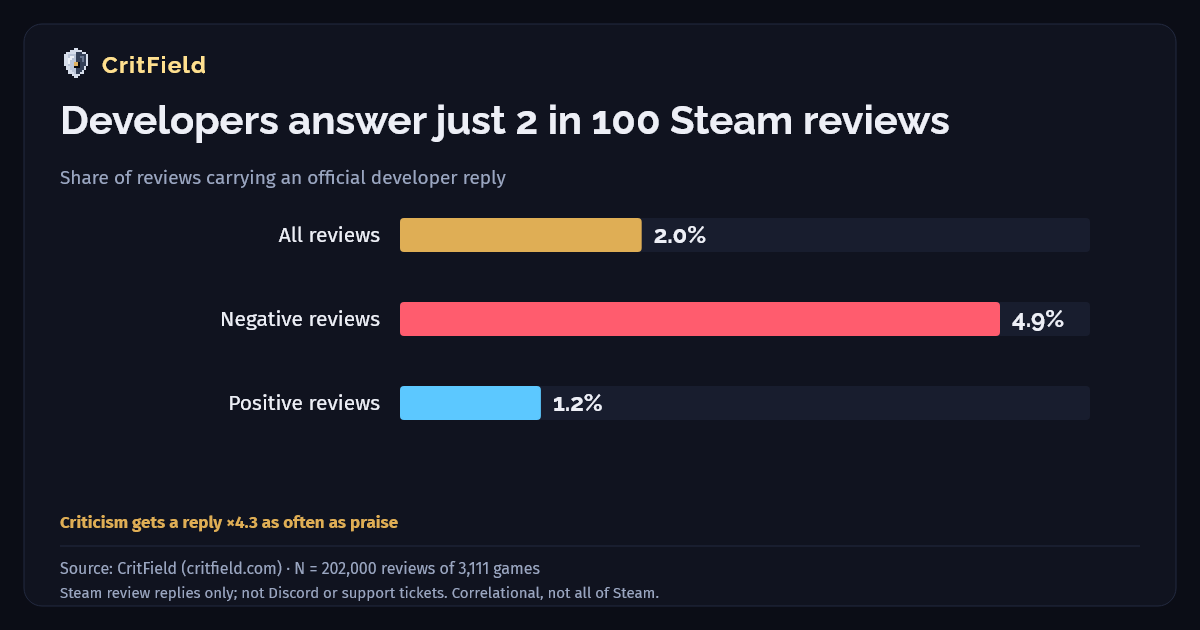
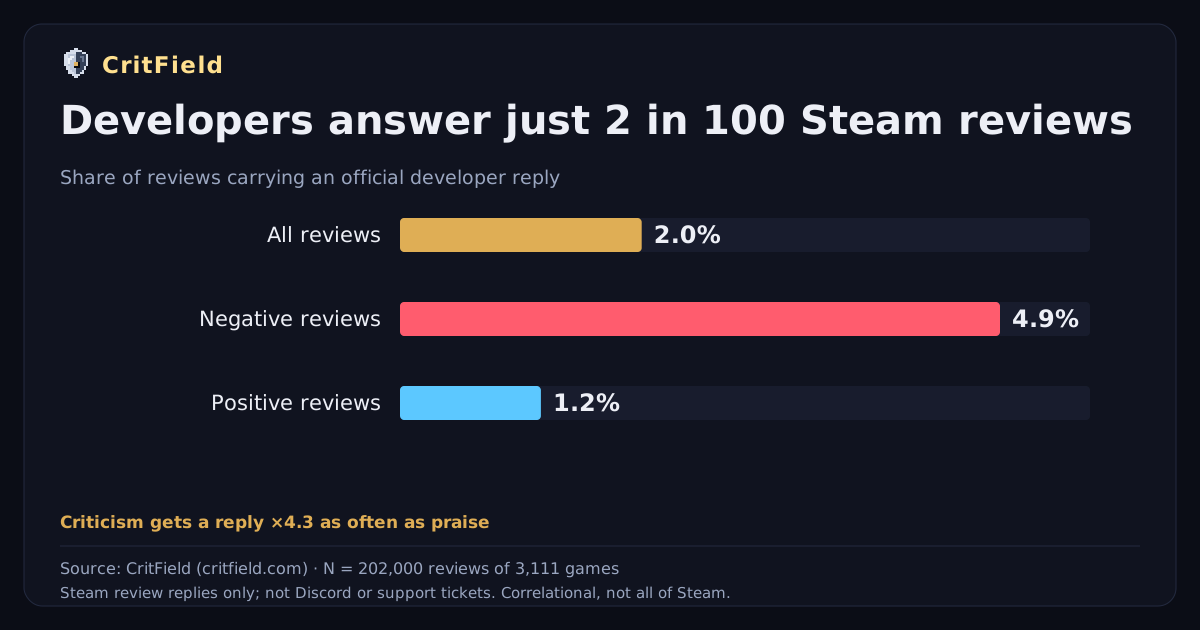
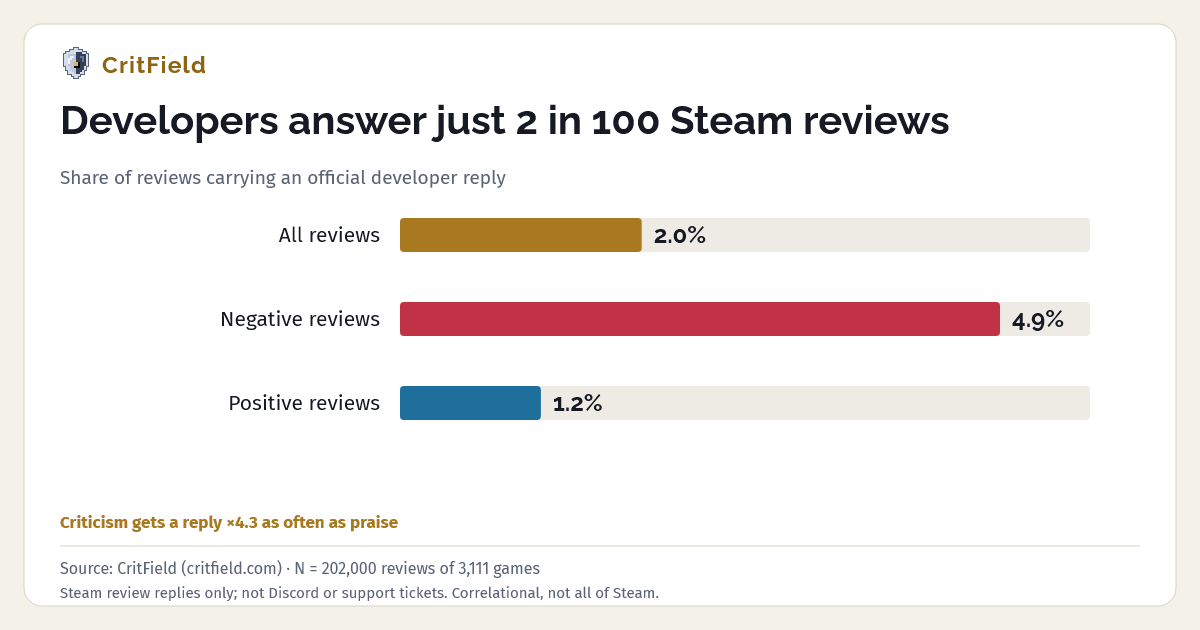
Developers answer just 2 in 100 Steam reviews
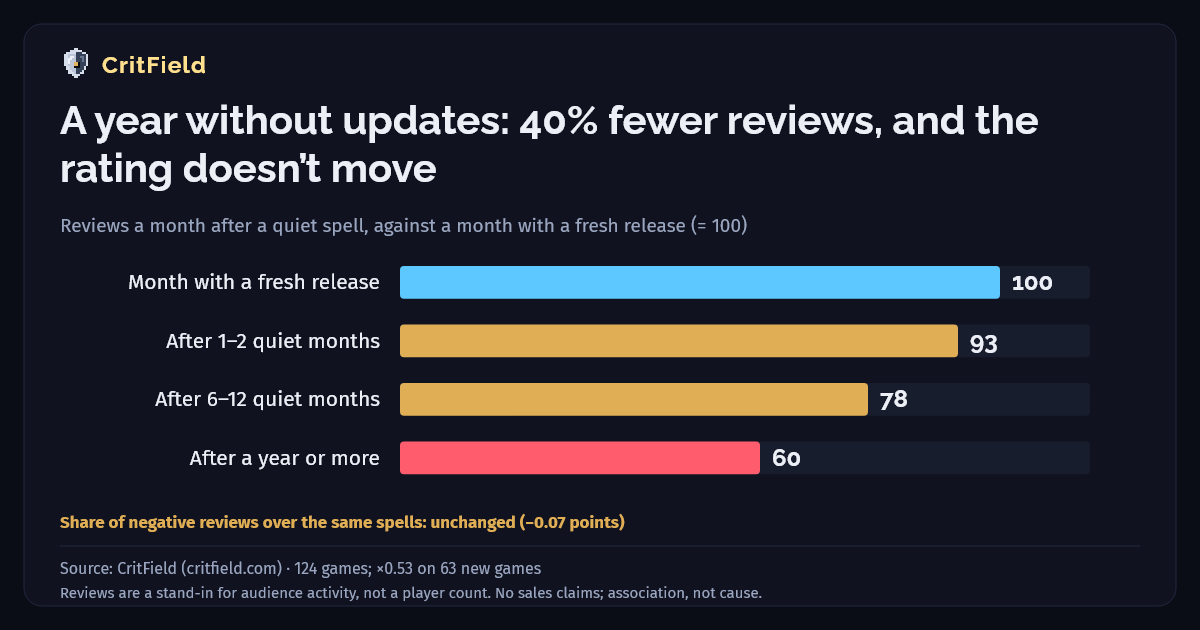
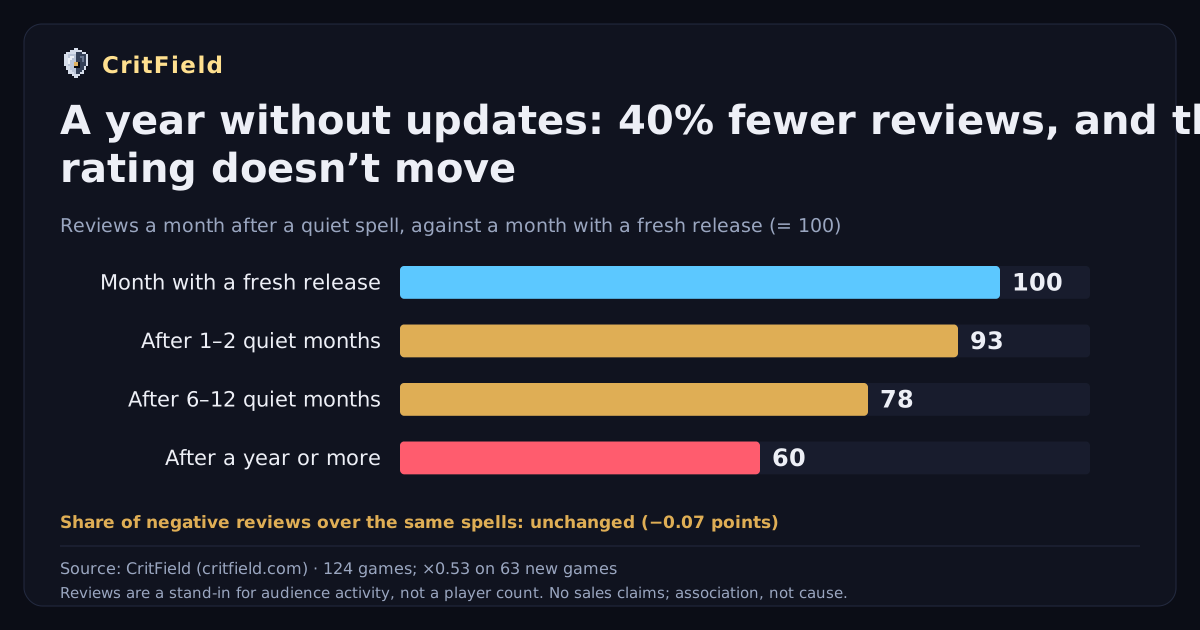
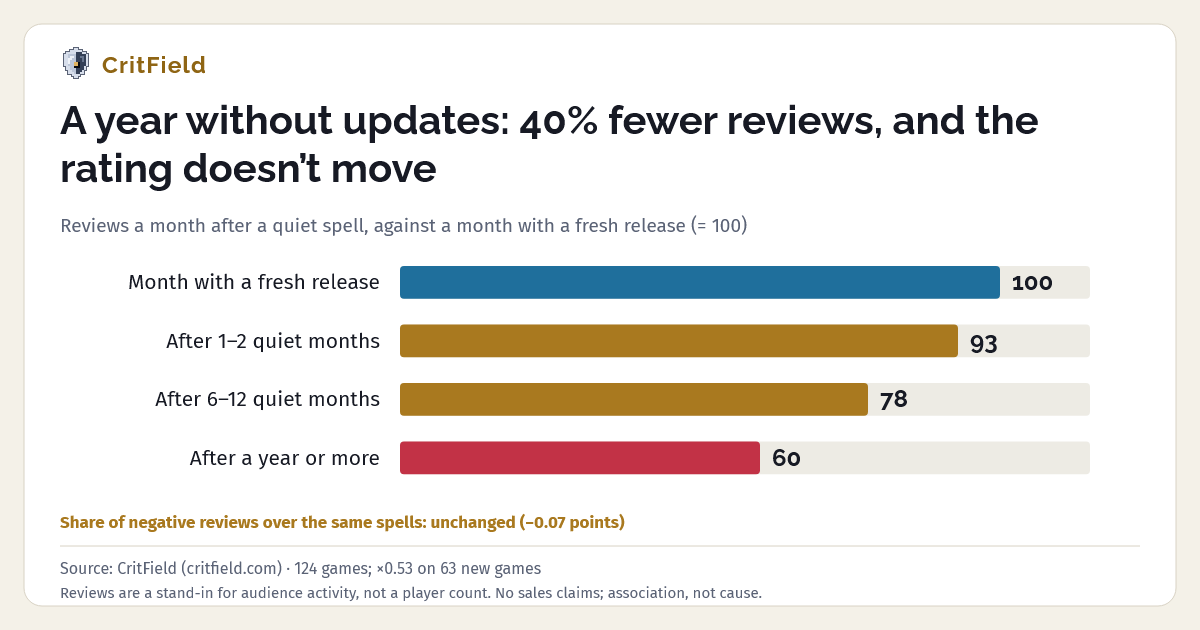
A year without updates: 40% fewer reviews, and the rating doesn’t move
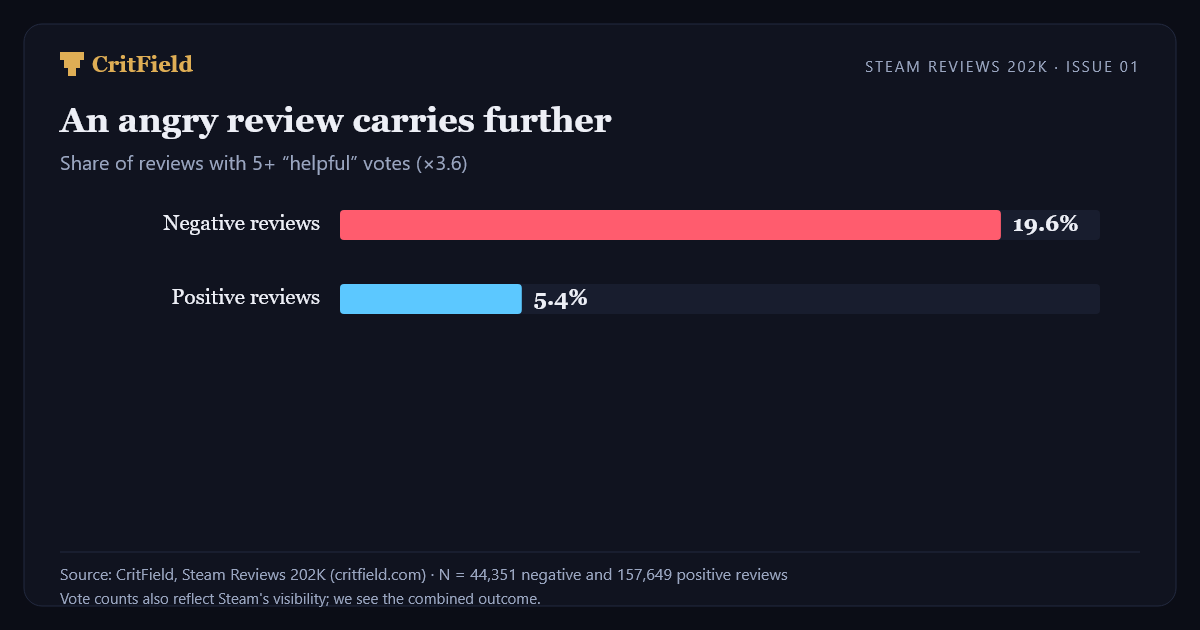
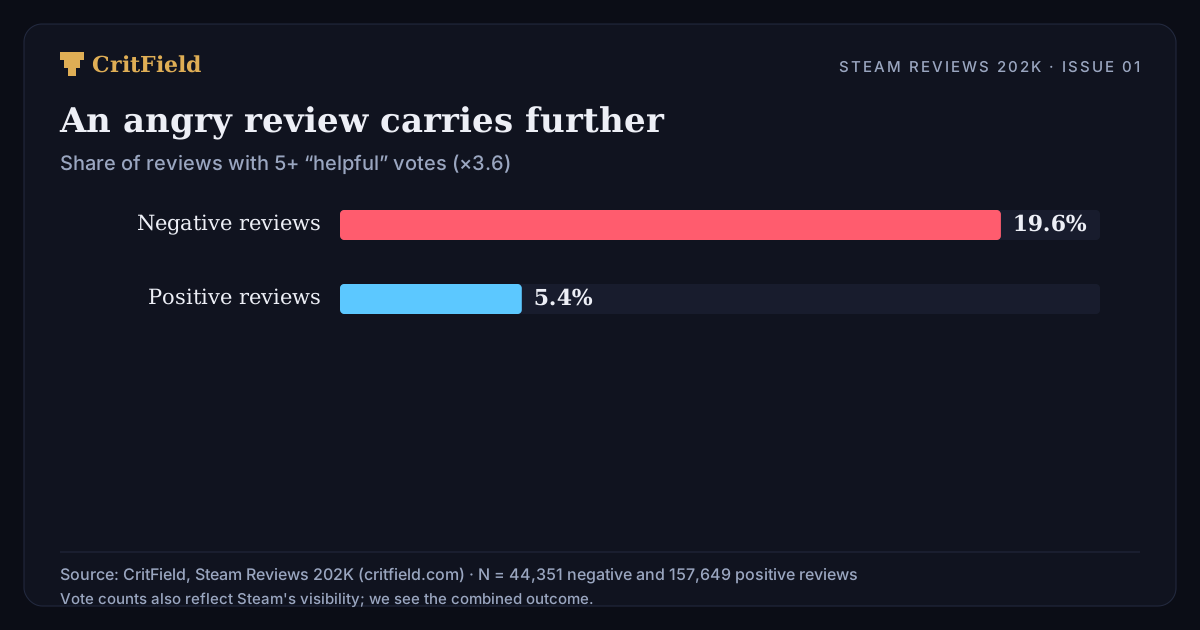
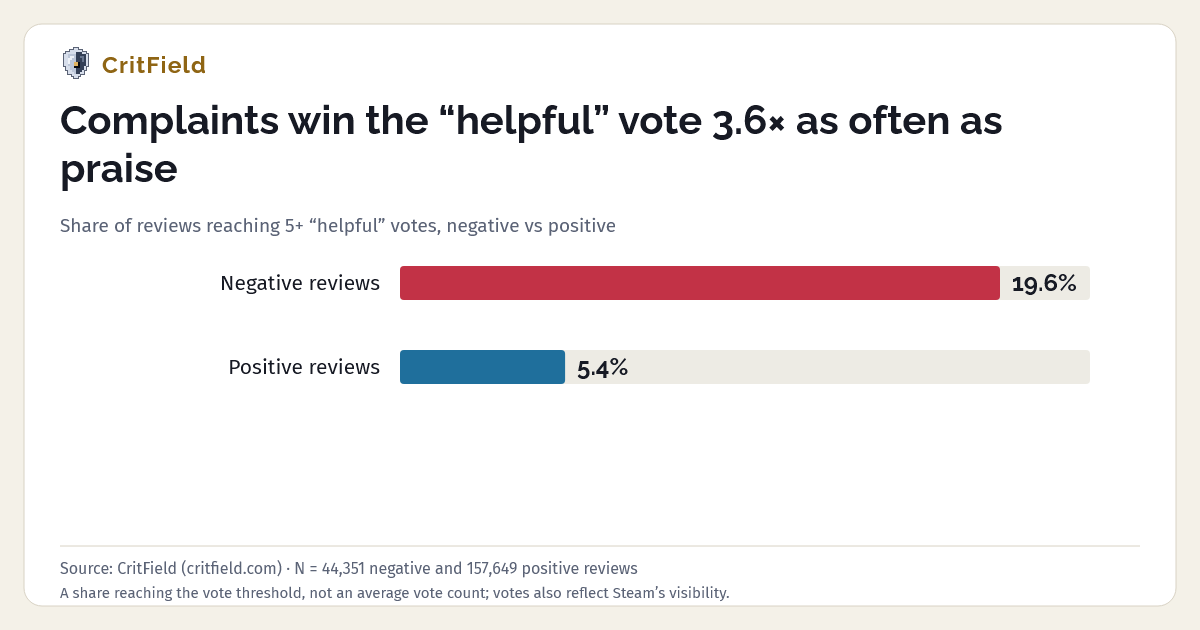
Complaints win the “helpful” vote 3.6× as often as praise
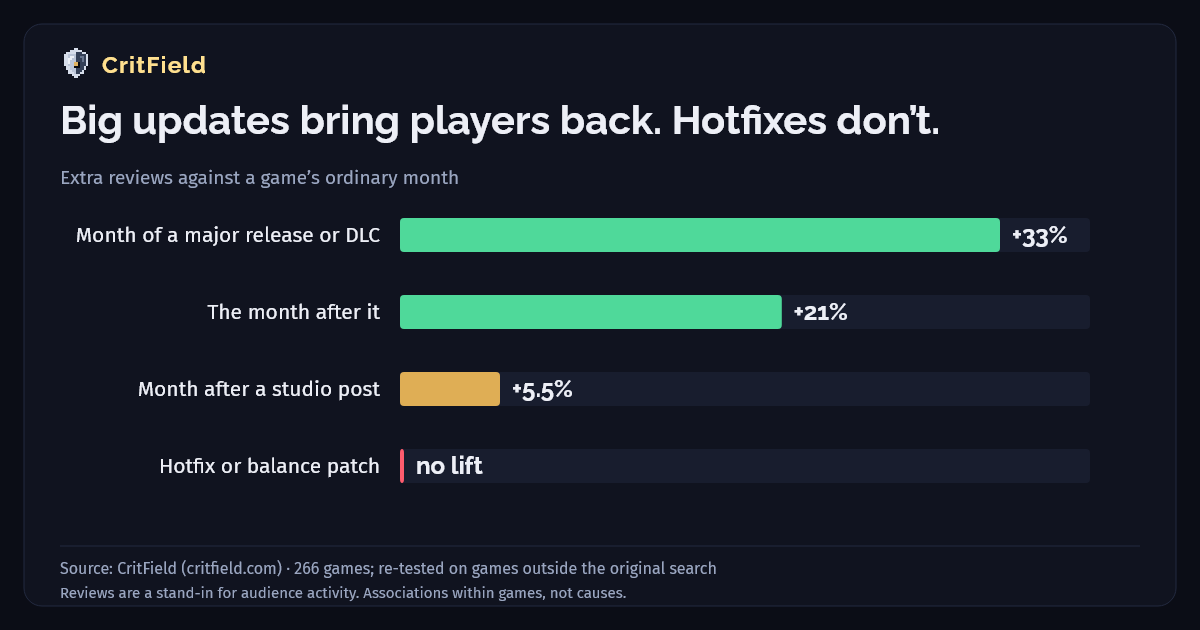
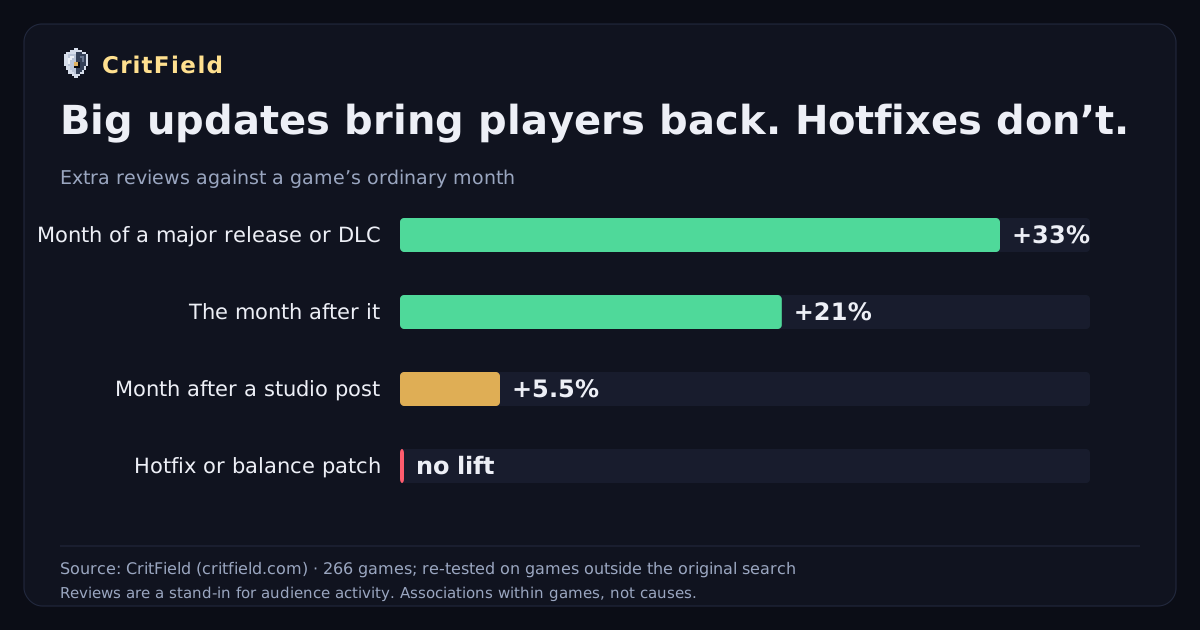
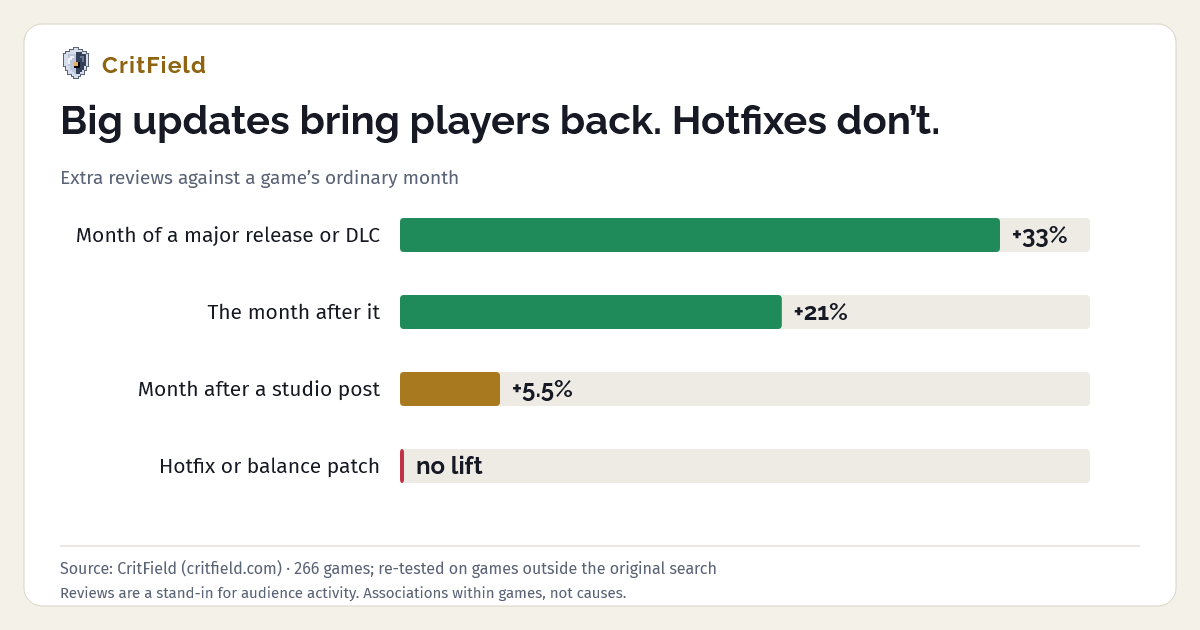
Big updates bring players back. Hotfixes don’t.
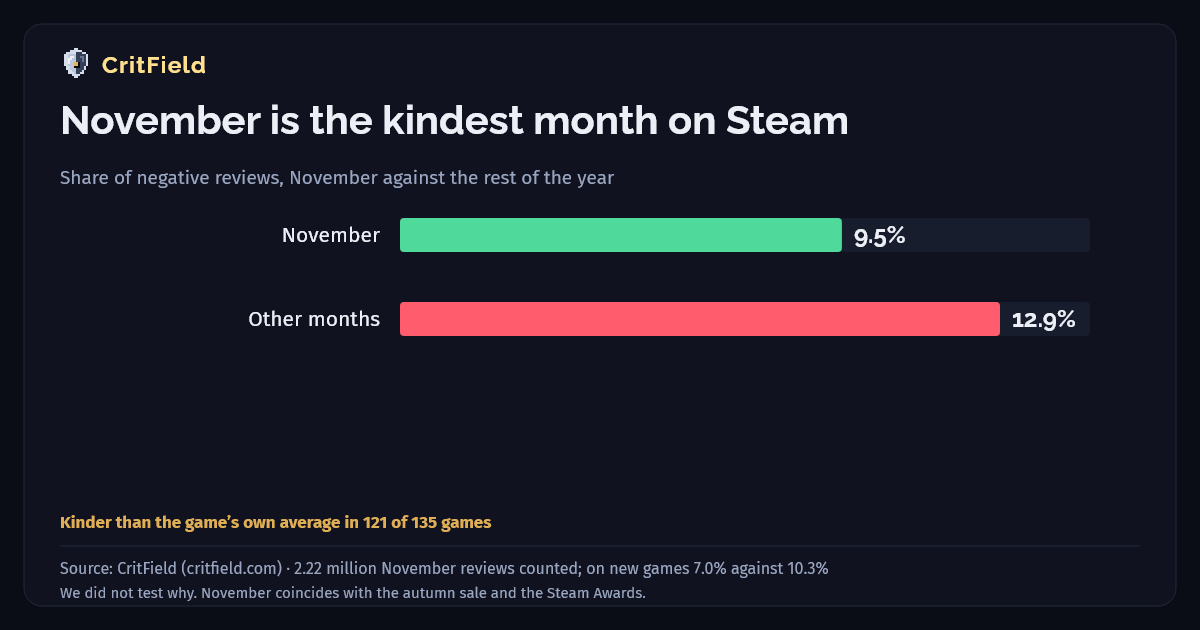
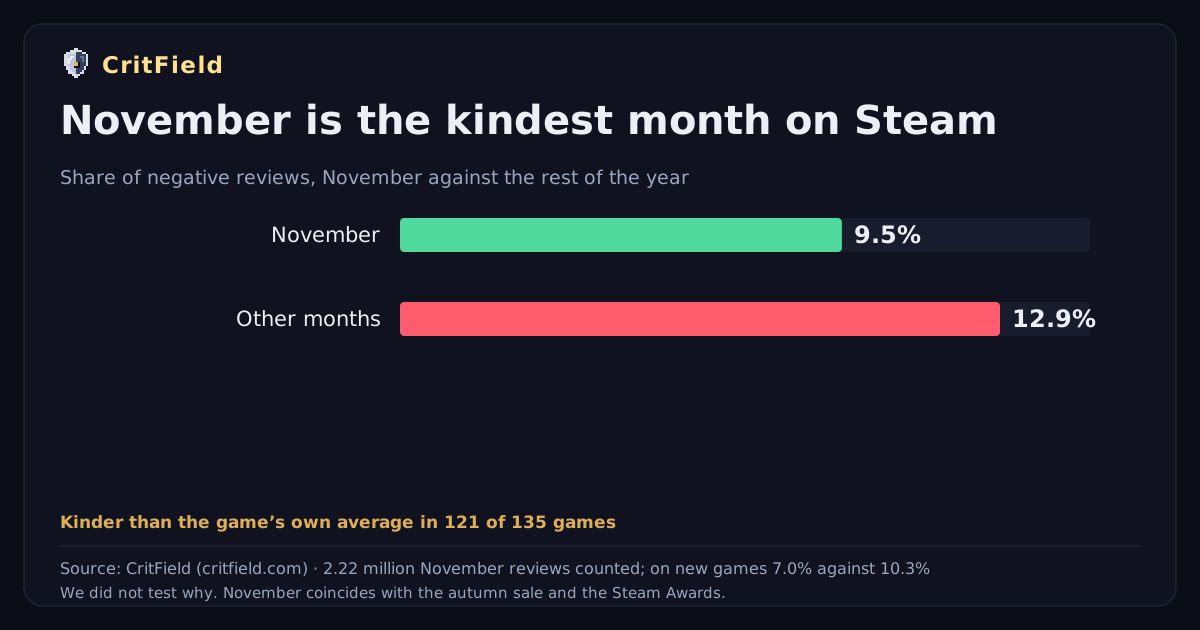
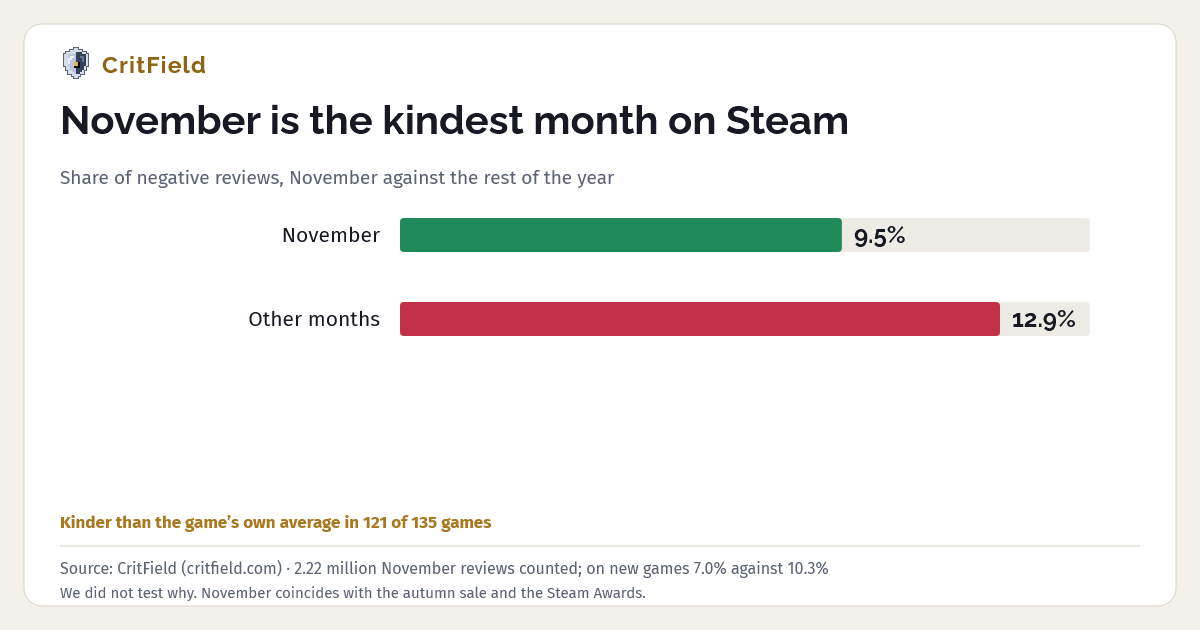
November is the kindest month on Steam
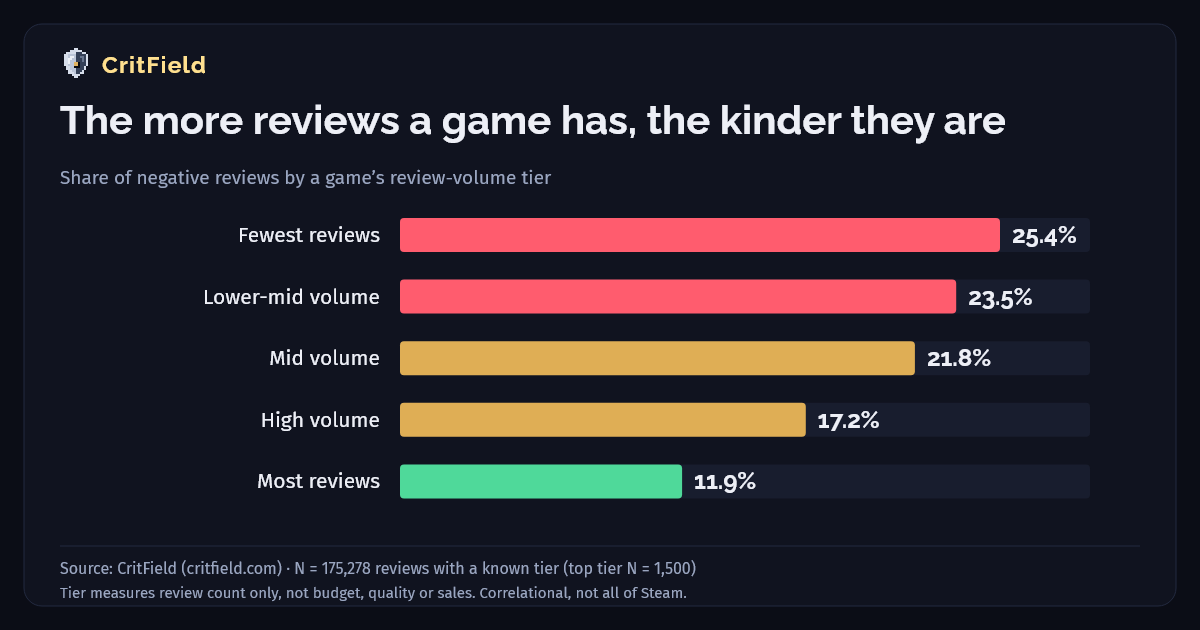
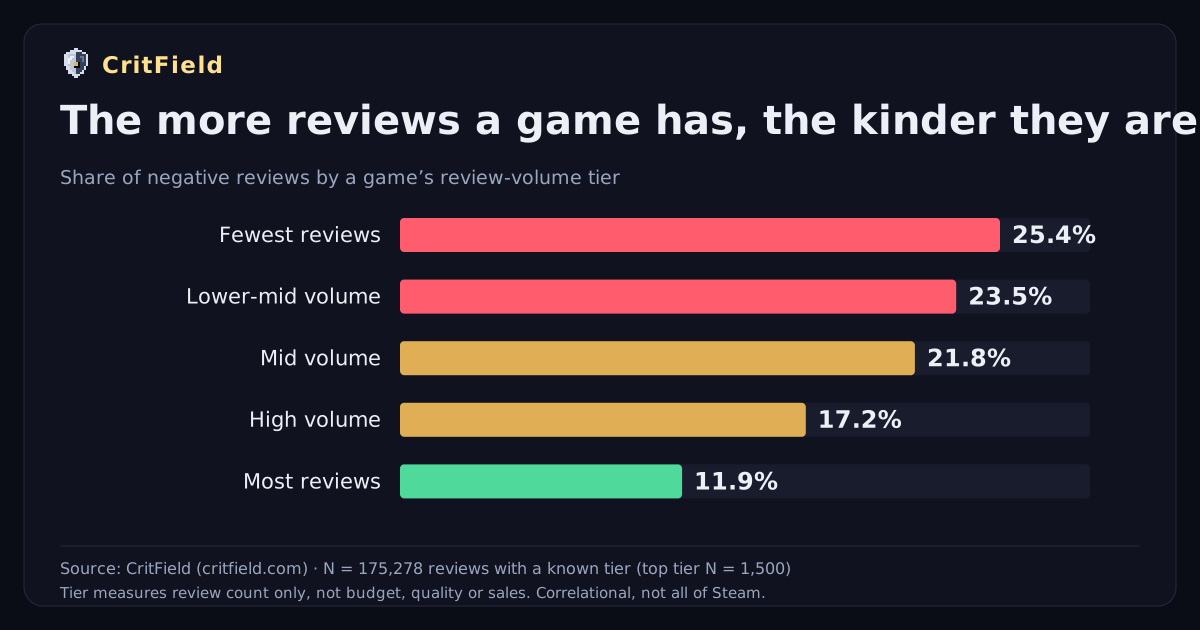
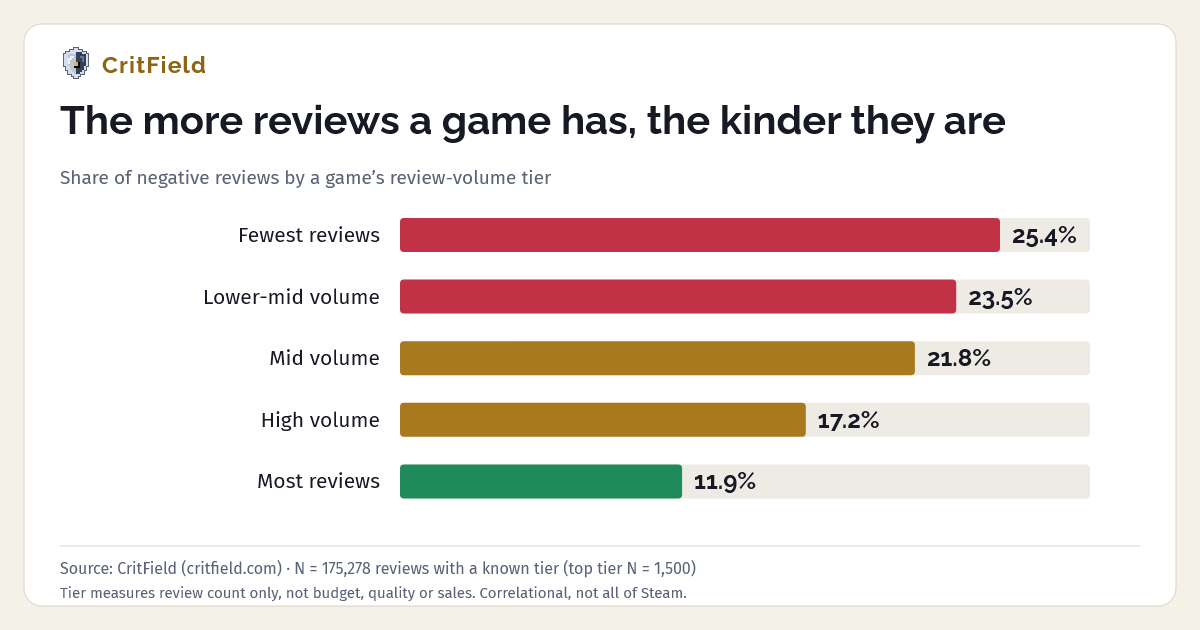
The more reviews a game has, the kinder they are
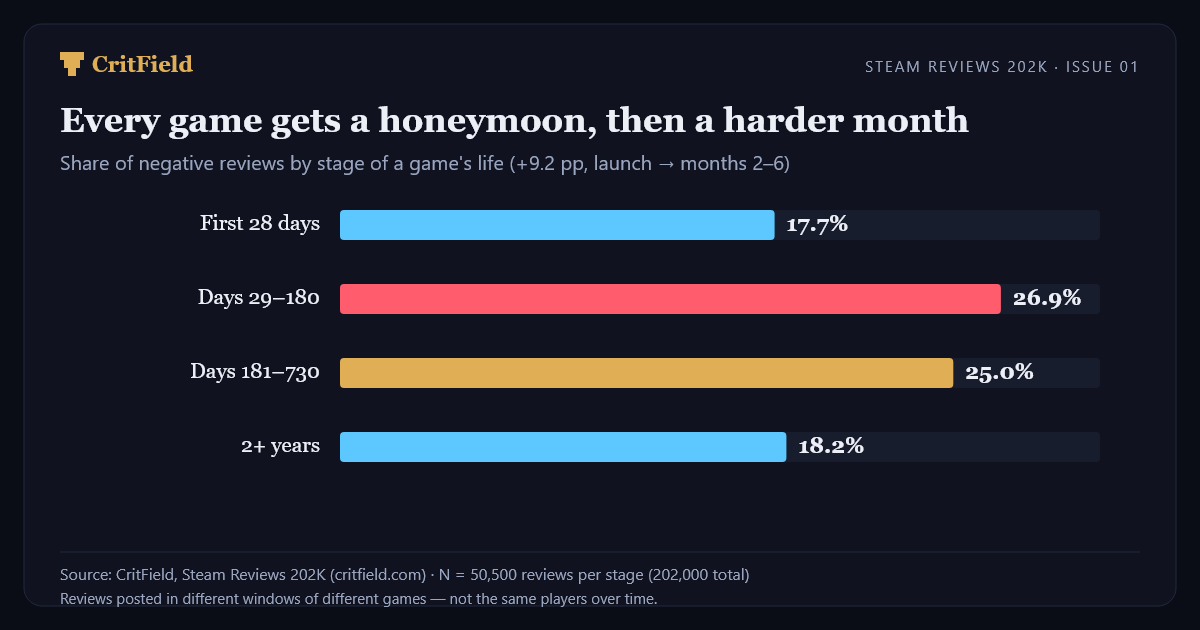
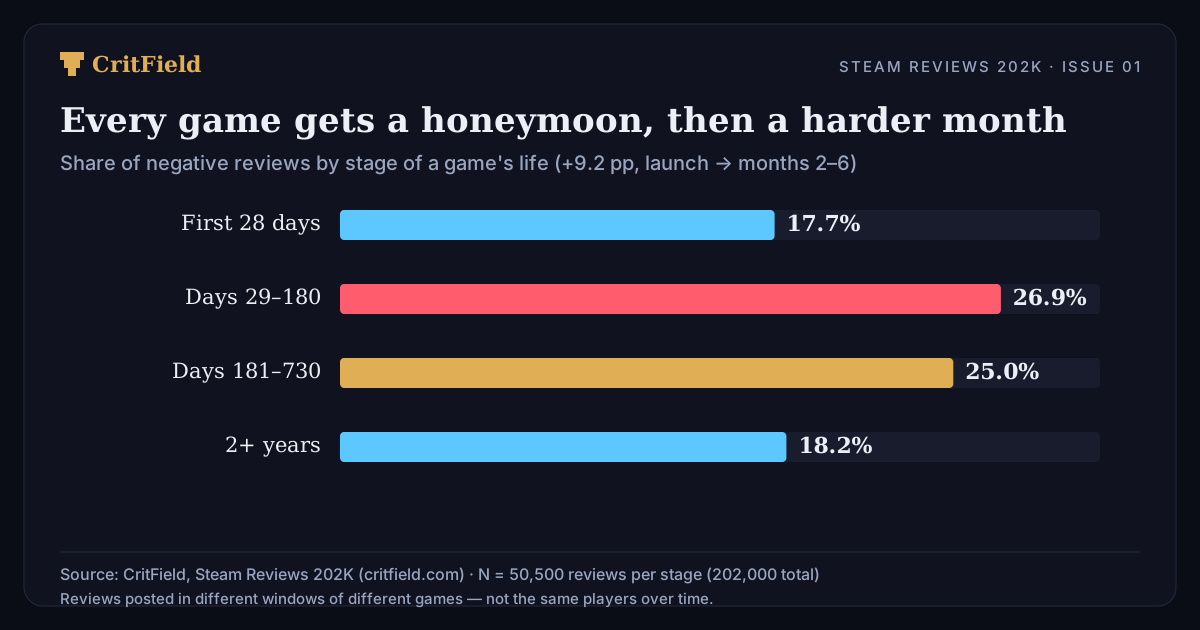
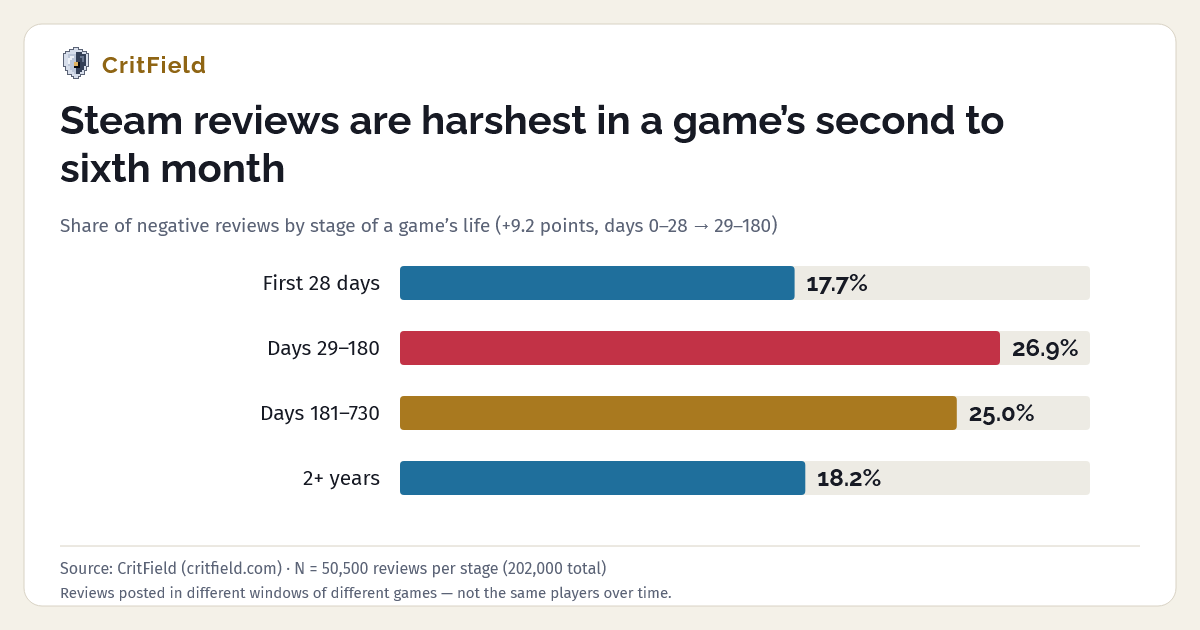
Steam reviews are harshest in a game’s second to sixth month
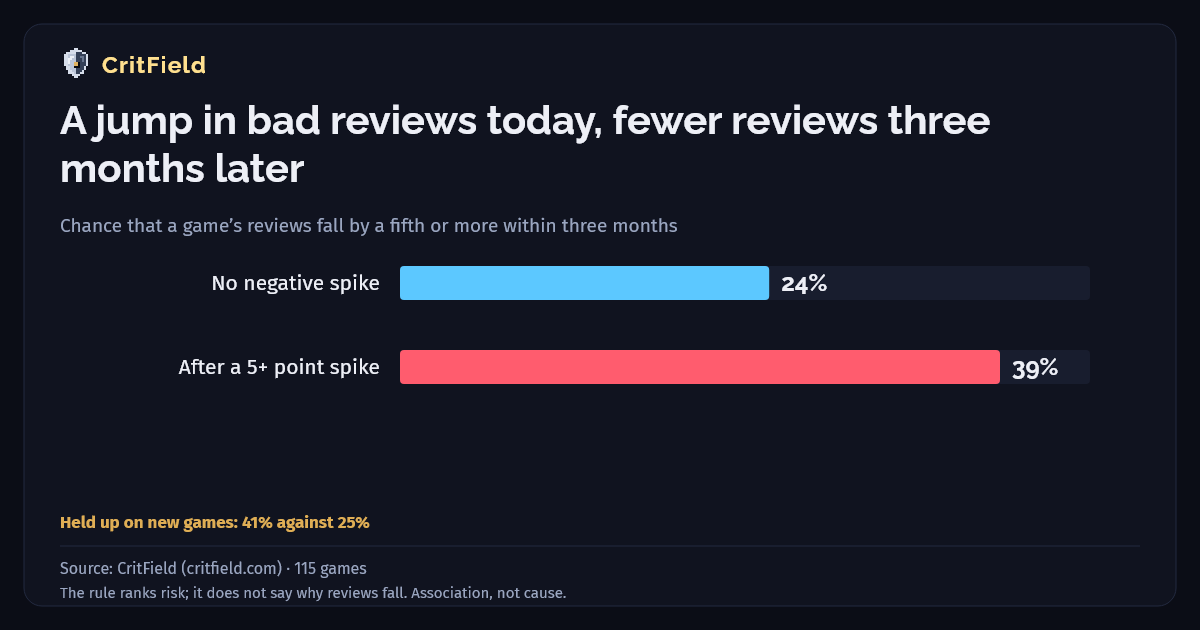
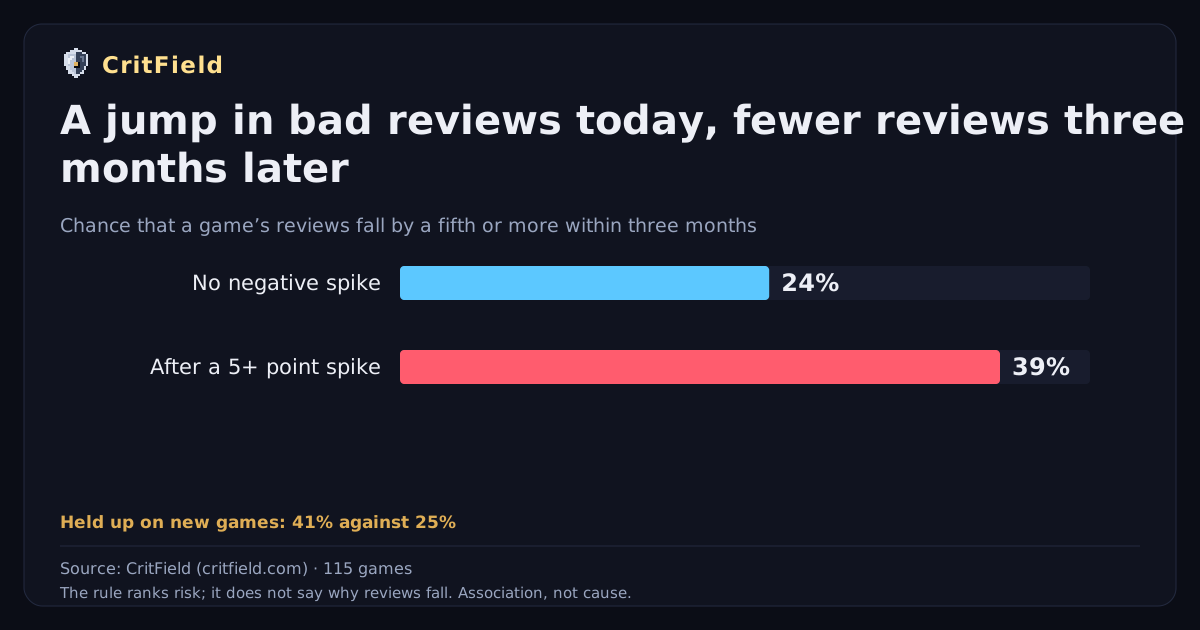
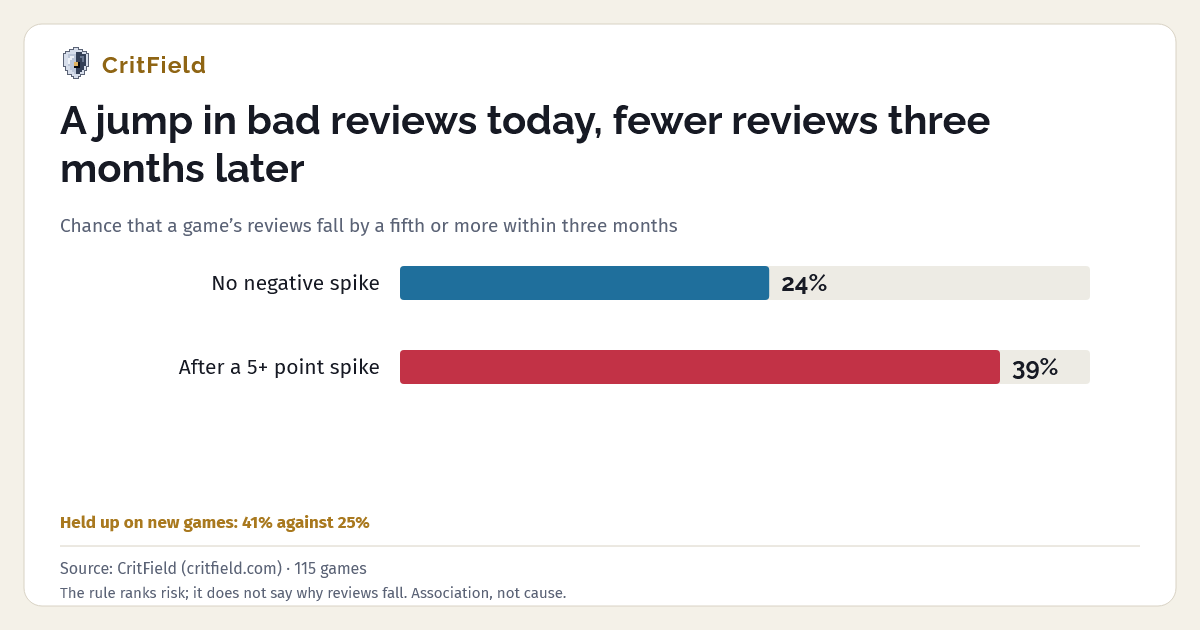
A jump in bad reviews today, fewer reviews three months later
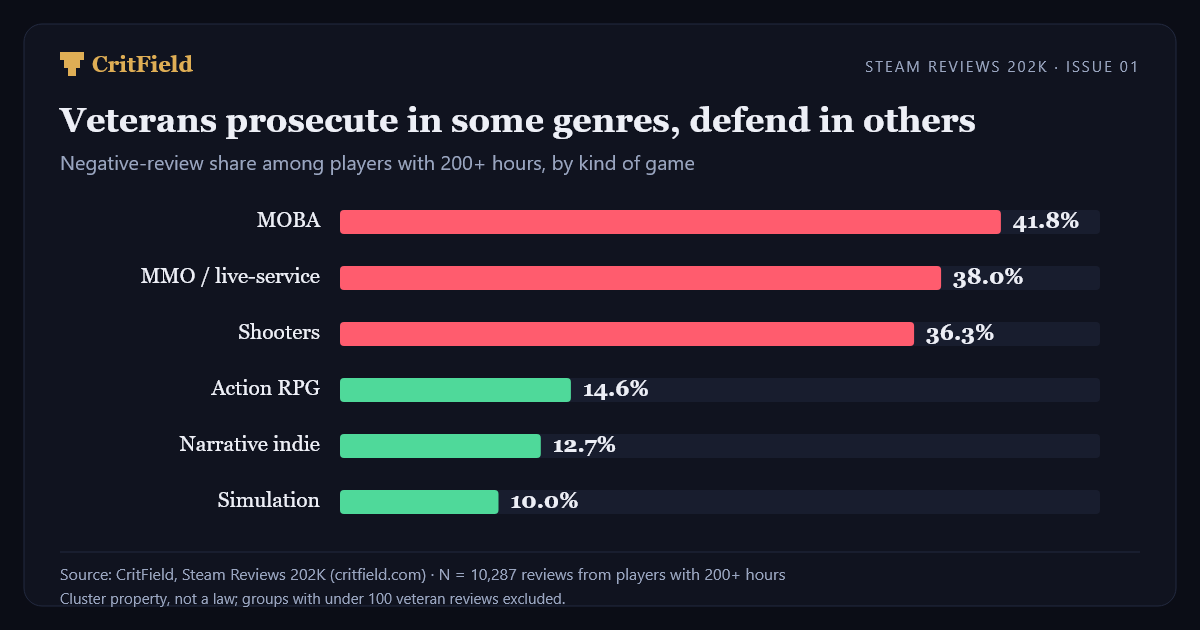
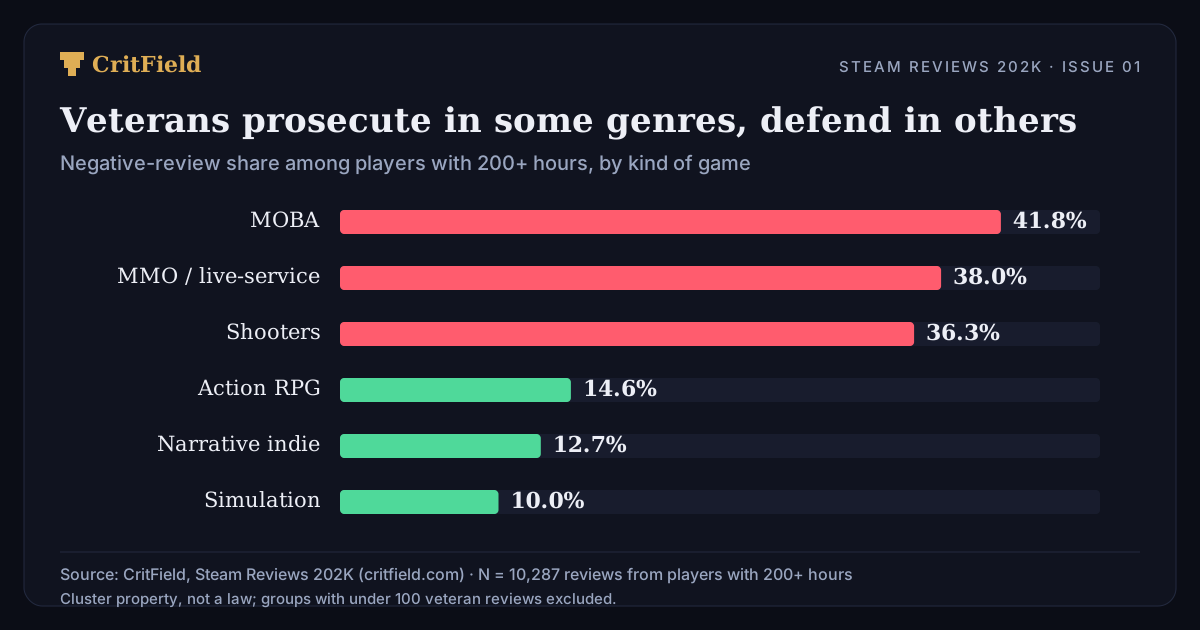
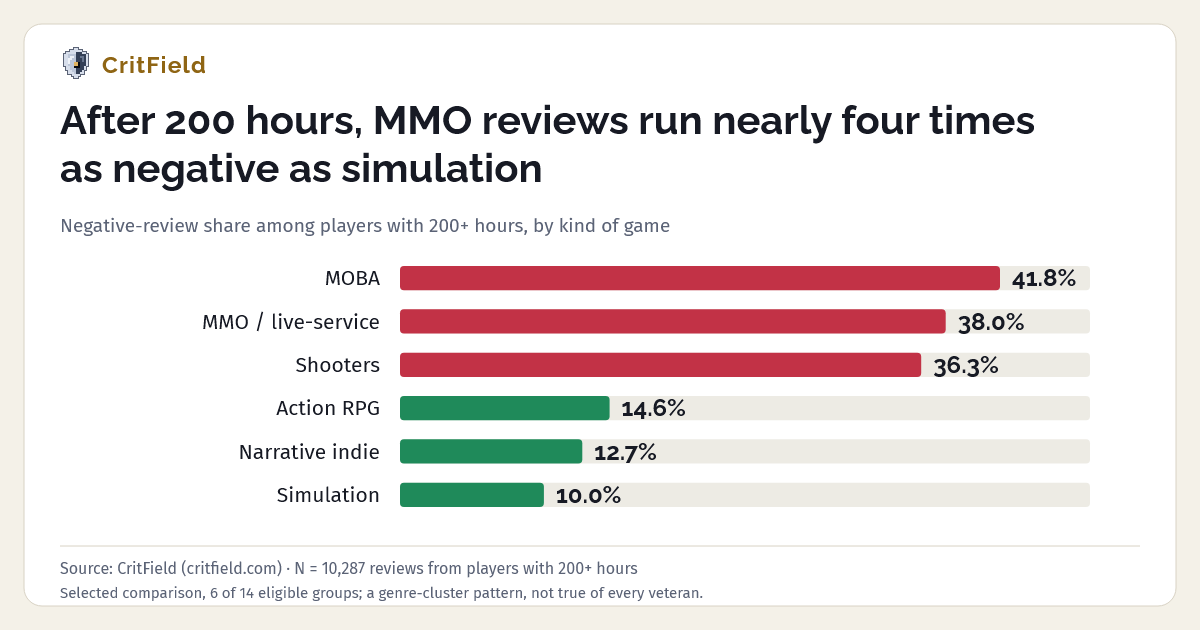
After 200 hours, MMO reviews run nearly four times as negative as simulation
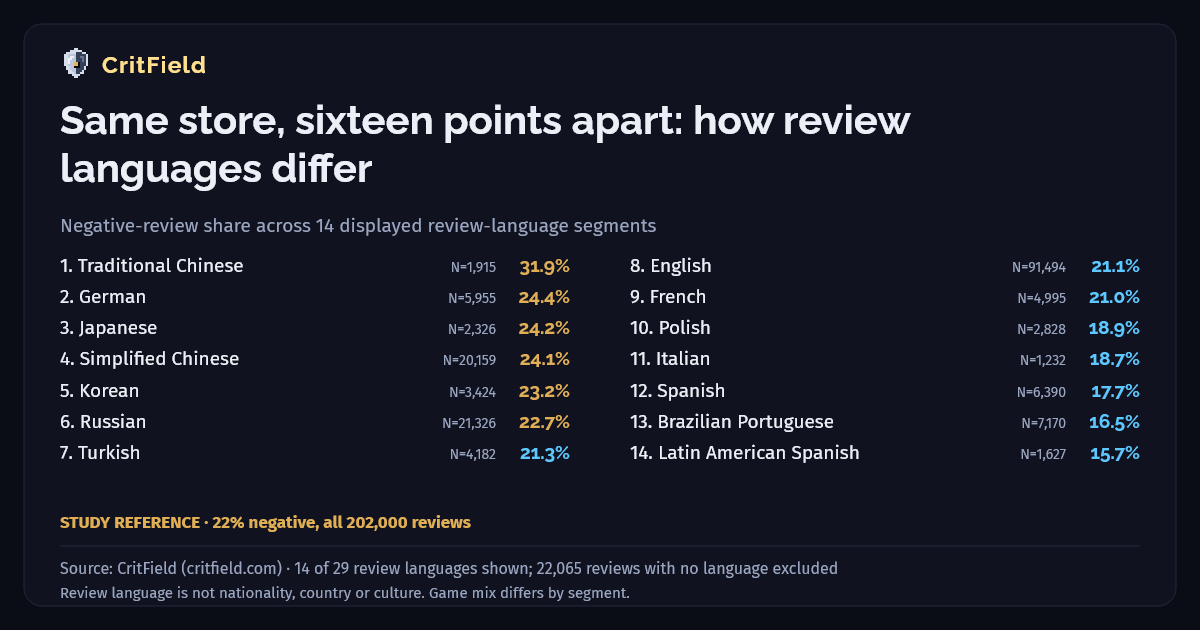
Same store, sixteen points apart: how review languages differ
 All findings are correlational, specific to this sample, and not causal — different reviews of different games, never the same players followed through time.
 02 · In the news
Where these numbers ran
Newsrooms in five countries have built stories on these figures. Open a story, or jump to the chart behind it.
-
Tarreo Gamer
tarreo.com
Read the story
“Evita las reseñas en Steam de jugadores con menos de 2 horas y más de 1.000 horas”
A buyer’s guide built on the refund-window, veteran and language figures.
Also carried by Yahoo Noticias
Chart: First two hours -
gamebiz
gamebiz.jp
Read the story
“Steamゲーム開発者のレビュー返信率はわずか2%にとどまる”
Developer replies: 2% overall, 4.9% of negative reviews, 1.2% of positive ones.
Chart: Developer replies -
Ludens Media
ludens.com.tw
Read the story
“調查:Steam 開發者只回覆 2% 的評論 負評回覆率 4.9% 高於好評”
The developer-reply figures for Traditional Chinese readers.
Chart: Developer replies -
GamersGlobal
gamersglobal.de
Read the story
“Studie: Negative Steam-Reviews haben mehr Gewicht als positive”
Why criticism clears the helpful-vote bar 3.6 times as often as praise.
Chart: Helpful votes -
GameChosun
gamechosun.co.kr
Read the story
“스팀 리뷰에도 ‘허니문’이 있다?…10~50시간대 가장 긍정적, 장기 이용자는 다시 냉정해졌다”
The playtime curve: harshest in the first two hours, kindest at 10–50 hours, colder again past 200.
Chart: First two hours -
gamebiz
gamebiz.jp
Read the story
“Steamストアのレビュー数が多いゲームほどネガティブ評価率が低下”
The review-volume ladder: 25.4% negative at the bottom, 11.9% at the top.
Chart: Review volume
 03 · Credit
Credit line

Need a quote or a number checked?
Send the number or the question. A researcher replies with the figure, its source and its caveat.